
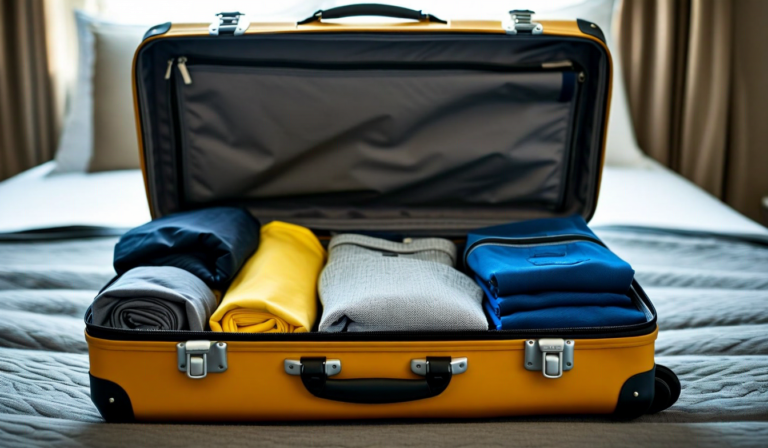
The overpacking instinct comes from a specific fear: you'll need something and won't have it. The overcorrection to that fear is bringing enough stuff to survive any scenario, which creates a different problem. You're carrying a bag that weighs 25 kilograms through airport terminals, cobblestone streets, and train station stairs. Every extra kilo is a daily tax on the physical experience of traveling. The solution isn't packing light as a philosophy - it's packing specifically for the trip you're actually taking.
Determine Bag Size Before Packing, Not After
Most people start with "what do I need to bring?" and then find a bag that fits it. This is backwards. Start with the bag type appropriate for the trip - a carry-on for trips with one or two city changes, a single checked bag for multi-week trips, a 40L hiking pack for outdoor travel - and then make the packing list fit that constraint.
This approach forces the necessary trade-offs before you pack rather than after you've already committed to bringing something. "I want to bring the second pair of dress shoes" is a different decision when you're staring at a bag that already has one pair in it and is nearly full, compared to when you're building a list before you've opened the bag at all.
Bag constraints by trip type:
Weekend trips (2-4 days): Personal item only (under-seat bag, approximately 20-25L) or small carry-on. If you can't do a weekend trip in a personal item after some practice, you're bringing things you don't actually use.
Week-long trips (5-8 days): Carry-on only (21-22 inch, approximately 40L). The vast majority of 7-day international trips can be done on carry-on only by travelers who are willing to wear clothes more than once and do a small laundry if needed.
Multi-week trips (2-4 weeks): Carry-on plus personal item, or a single checked bag if the destination makes laundry access uncertain or the trip involves formal activities requiring specific clothing.
Extended trips (1+ month) or trips with varied activity types: One checked bag maximum. Two checked bags for one person creates significant operational drag on trips with multiple city changes.
The 5-4-3-2-1 Clothing System
This system originated in the travel hacking community and has been refined through use. For a week-long trip: 5 pairs of socks and underwear, 4 tops, 3 bottoms, 2 pairs of shoes, 1 jacket or outer layer. The numbers compress for shorter trips and expand slightly for longer ones.
The key principles behind the numbers: underwear and socks can't be repeated without laundering, so you pack one per day (or fewer if you do laundry mid-trip). Tops can be repeated with two days between wearings without social friction. Bottoms can go three or four days between wears if they're not visibly soiled. Shoes are the heaviest per-item thing you pack, and two pairs (one versatile walking shoe, one appropriate for nicer dinners or activities) handles 95% of trip scenarios.
Merino wool clothing extends the wear-between-wash interval significantly. A merino wool base layer can be worn three to four days consecutively without odor, and it dries quickly for hand washing. It's genuinely worth the higher per-item cost for travelers who take frequent or extended trips.
Toiletries: The Overpacking Zone
Toiletries are where overpacking is most culturally normalized. The "just in case" instinct runs strongest here: the full-size shampoo, the backup medications, the five different skin care products. A useful reframe: virtually every pharmacy in any destination you're likely to visit stocks basic toiletries. The downside of running out of shampoo in a city with drugstores is minor inconvenience, not hardship.
Pack the minimum viable toiletry kit: 100ml or smaller containers of the products you genuinely use daily, a solid or bar option where possible (soap, shampoo bars take less space and aren't subject to liquid limits), your prescription medications in full quantity, and any specialized items that you actually cannot replace easily at the destination.
Pre-planning your toiletry kit against the TSA 3-1-1 rule (liquids in containers of 3.4 ounces or less, in one quart-sized clear bag) is worth the 10 minutes it takes before any trip where you're flying with carry-on only. Being pulled out of the security line and asked to check a bag you planned to carry on is an easily avoidable delay.
The Electronics Load and What to Cut
Electronics are the second major overpacking zone. The standard modern traveler packs: laptop, tablet, e-reader, phone, camera, multiple charging cables, power bank, universal adapter, and headphones. That's seven to eight items before any other consideration.
Audit honestly against actual usage. An e-reader and a tablet that both serve reading functions is redundancy that adds weight for limited benefit. A professional-grade camera brings genuine capability but also significant weight and security anxiety. A phone camera on a current-generation smartphone is sufficient for the vast majority of leisure travel photography.
The items that are genuinely non-negotiable: phone, charging cable, and a universal adapter if you're traveling internationally to destinations with different socket types. Everything else is additive. Pack the additions you'll actually use, not the ones you might use in a specific scenario that's unlikely to materialize.
Packing for Multi-Climate Trips
Multi-destination trips that span different climates - say, Tokyo in autumn and Bali in the same trip - create the hardest packing challenges. You need clothing appropriate for cool urban exploration and for tropical beach conditions.
The solution is layering rather than category-specific clothing for each climate. A lightweight merino long-sleeve that works in Tokyo's cool evenings can be worn under a packable down jacket for the coldest days and works on its own in milder tropical evenings. Cotton beach shorts that are genuinely casual don't need to stay in Bali - they work as casual bottoms in other contexts too.
Avoid bringing full outfits specific to each climate leg. Instead, build a core wardrobe that overlaps significantly across climates and supplement with one or two climate-specific items (a packable rain jacket, a lightweight sarong, a single warm layer) rather than an entirely separate clothing set per destination.
The One Unconditional Rule
Pack your bag, close it, and carry it for 15 minutes around your home before you travel. Up stairs, down stairs, as if you're navigating with it at an airport. If you're winded or your shoulders hurt after 15 minutes, the bag is too heavy. This sounds trivial but it produces immediate clarity about what to remove. The abstract question "is this bag too heavy?" becomes very concrete when you're actually carrying it.
For trips with significant city-to-city movement, like the multi-destination itineraries we describe in our guide on planning trips with multiple destinations, bag weight is not an aesthetic preference but a practical one. You'll carry that bag up and down stairs at train stations, across uneven cobblestones, and between accommodation and transit on every city change. The lighter it is, the better the transitions feel.
Final Note
The goal is not minimalist travel as an identity. The goal is a bag that doesn't limit the trip. When your bag is the right size for the trip and contains the right things for the activities you're doing, it becomes invisible - you stop thinking about it and focus on where you are. That's the target.